









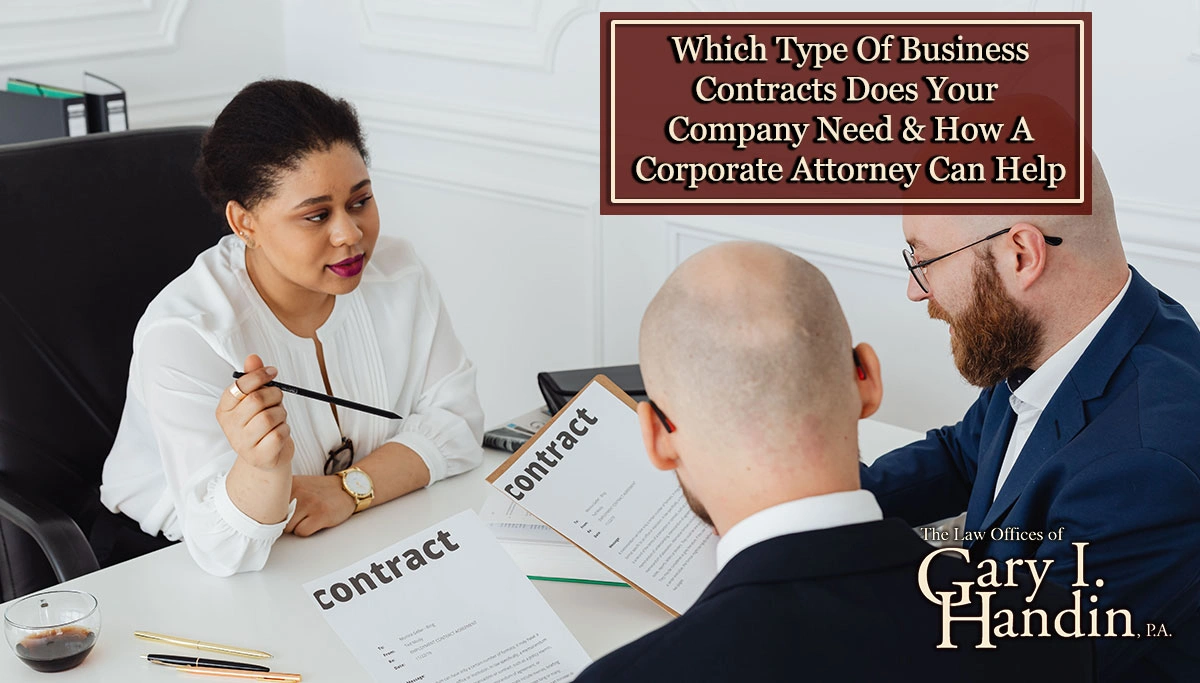
A huge part of owning a business is drawing up and signing contracts. These are the documents that outline arrangements with partners, employees, and essentially allow your business to function. A signed contract is generally binding unless there are certain exceptions, so it’s vital to read each line of every transaction before signing.
However, in an era of docu-signing online, it’s tempting to skim through and add a signature without careful scrutiny of what you are agreeing to. A corporate attorney can sift through the “legal-ese” and explain in plain terms what each party is agreeing to, in order to prevent complications down the line.
Read on to learn more about which steps to take before signing any business agreement, recommended by the corporate attorneys at Handin Law.
Advice From A Corporate Attorney Before Signing Business Contracts

Understanding what you’re signing is critical for your financial interests and professional integrity. Before taking out your pen, follow these steps.
Read The Entire Document

This may sound like common sense, but it’s skipped entirely too often. The text on business documents can often be tiny and full of complex language that is hard for laypeople to understand. A corporate attorney is well-versed in the language of corporate business and can help “translate” every line, including the fine print. This will help you avoid any legal surprises later. All important details must be included in writing, as verbal agreements are difficult to enforce, legally and practically.
Verify All Parties
The contract should identify your business by name and confirm that you are licensed and registered to do that business. The name on the contract should be the same as the one registered with the state; even a misplaced punctuation mark can be problematic for legal purposes.
It’s also important to verify that a business – yours or a partnership – is licensed and in good standing according to state laws. This protects the liability of everyone involved in advertising, submitting bids, and performing the work.
Identify Red Flags
A corporate attorney will be able to decode any liabilities or complex arbitration clauses that are worded so they are easily misunderstood by the average person. You don’t want to agree to any potentially costly clauses you may not fully understand.
Check Intellectual Property
The Internet has made it difficult to understand and enforce matters of intellectual property. However, ownership rights for creative work are legally protected, and you will be compensated fairly for it.
Secure A Copy

Every party involved should have a copy of the business agreement; multiple copies, even. Everything needs to be signed, finalized (potentially notarized), and kept for your records.
Look For Terms That Affect Workers’ Comp Immunity
If a subcontractor’s employee is hurt while on the job, they are entitled to seek damages from the contractor. Normally, the subcontractor would be protected from liability for an employee’s injury. However, depending on the wording in the contract, the subcontractor may be required to reimburse the general contractor for the damages paid to the injured employee.
A corporate attorney can ensure that the contract is worded in a way that protects your interests in any likely circumstance.
Know How To End The Contract

Signing a contract often indicates an exciting chapter for a business. But sometimes, life happens, circumstances change, and contracts must be ended. There can be any number of consequences for doing so, depending on what the contract contains. Sometimes there are clauses about how to terminate the agreement, or options not to renew at a certain time. Others may allow you to cancel services at any time: the most preferred option.
You should be fully aware of what will happen if a contract comes to an end. Outstanding payments or services should be specified, as well as whether those will continue after the contract ends. Some agreements may require information or property that needs to be returned. The terms should be clear so each party understands what their obligations are.
Know Your Rights
A well-written contract will specify the rightful owners of product or material, such as creative works (intellectual property), logos and trademarks, and other relevant information. The contract should reflect exactly what terms were agreed upon by all business parties involved, with no surprises in fine print. Each party should sign knowing exactly what they agreed to, and what is expected if they fail to fulfill their obligations. A corporate attorney will help you understand what you are entitled to if any aspect of the contract is violated or unfulfilled.
Consult A Corporate Attorney In South Florida
Signing contracts is a standard part of doing business, and signatures make them binding. Don’t leave anything to chance when it comes to your professional reputation and financial well-being: consult with a local corporate attorney from Handin Law to fully understand what you are agreeing to. Line by line, your attorney can help you feel confident moving forward with business transitions by explaining your rights and other expectations.
Don’t make any binding agreements without our help. Call Handin Law today for all things related to business law at 877-815-4560.