









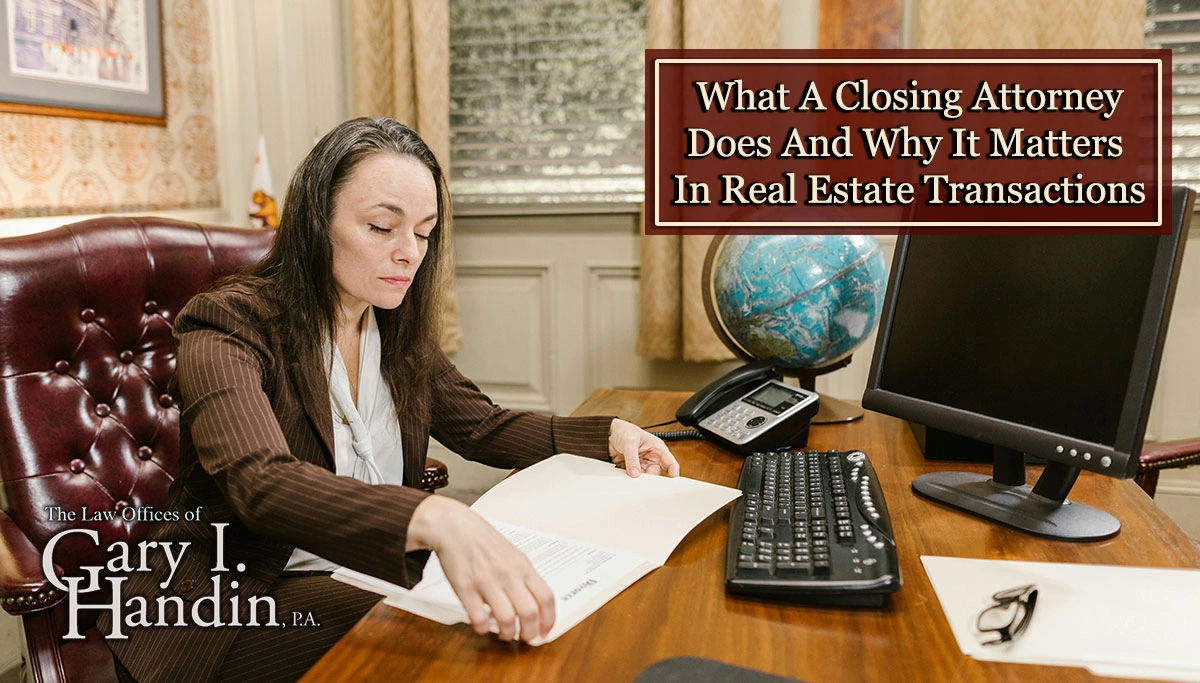
Buying or selling real estate in Coral Springs is a massive financial and legal transaction. From the initial contract right up until closing, multiple steps need to be taken. This process must be handled with precision to avoid any delays, disputes, or even unexpected liabilities. A closing attorney plays a critical role in protecting your interests and ensuring that your real estate transaction complies with state legislation. In a competitive South Florida housing market, legal oversight is not just helpful, but also essential.
What Is A Closing Attorney?
A closing lawyer is a licensed real estate attorney who oversees and manages the final stages of a real estate transaction. While you can utilize the assistance of title companies to facilitate closings, an attorney can provide legal advice, contract review, and direct representation to protect your rights throughout the buying or selling of your real estate transaction.
Unlike settlement agents that aren’t legal professionals, a licensed attorney can:
- Interpret and analyze contract language to ensure you are not at a disadvantage.
- Provide legal guidance to ensure that everything in the transaction is above board.
- Modify documents if issues arise, without the delay that would come from having to hire a different person to handle the matter.
- Provide representation if there is any dispute around the transaction.
Making use of a qualified real estate attorney provides an added level of protection. It’s not only suitable for higher-value transactions but all real estate transactions, as there is nothing more expensive than buying or selling a home.
What Are The Key Responsibilities of A Closing Attorney?
Your real estate attorney plays a vital part in guiding a real estate transaction from contract to completion. From reviewing and preparing legal documents to clearing title issues, managing escrow funds, coordinating with all parties, ensuring compliance with Florida law, and recording the deed, the attorney oversees every critical step to ensure the transfer of ownership is accurate, secure, and legally sound.
Let’s take a deeper look into it:
1: Reviewing And Preparing Legal Documents

A real estate attorney drafts, reviews, and explains all documents required to legally transfer ownership of property. All documents must comply with state legislation and accurately reflect the purchase agreement.
These documents include:
- Warranty Deed: This is a legal document that transfers ownership from seller to buyer and guarantees that the title is clear.
- Settlement Statement (Closing Disclosure): It’s a detailed financial breakdown of all costs, credits, and fees involved in the transaction.
- Mortgage and Note: It’s the loan agreement between borrower and lender outlining all repayment terms and the lender’s secured interest in the property.
- Affidavits and Disclosures: These are sworn statements confirming important details such as ownership status, liens, or property condition.
2: Conducting A Title Search
Your attorney will also oversee the title search process. A title search investigates the complete legal history of the property to ensure it can be transferred without complications or future ownership disputes.
This review identifies:
- Liens: Legal claims against the property for unpaid debts (such as contractor bills or unpaid taxes).
- Judgments: Court rulings that may attach to the property due to a seller’s financial obligations.
- Easements: Legal rights allowing others to use part of the property (such as utility companies).
- Encumbrances: Any claim, restriction, or limitation affecting the property’s use or transferability.
3: Managing Escrow And Funds
Your attorney typically holds and distributes funds of the transaction through an escrow account. Escrow is a neutral holding account that protects both parties until all contractual conditions are satisfied.
Funds commonly handled include:
- Earnest Money Deposit, which is the buyer’s good-faith deposit showing serious intent to purchase.
- Loan Proceeds, which are the funds provided by the lender to complete the purchase.
- Payoff Amounts are the funds used to satisfy the seller’s existing mortgage or liens.
- Prorations are any adjustments for property taxes, HOA dues, or utilities divided fairly between buyer and seller. Keep in mind that accurate fund distribution ensures no party is overcharged or underpaid.
4: Coordinating With All Parties

Real estate closings involve multiple professionals working together under strict deadlines. Proper coordination prevents last-minute surprises and keeps the closing timeline on track.
An attorney coordinates communication and documentation between:
- Real Estate Agents
- Mortgage Lenders
- Homeowners Associations (HOAs)
- Inspectors and Appraisers
5: Compliance with State Legislation
Florida real estate law includes specific disclosure requirements, recording procedures, and funding protocols. Compliance errors can result in delays, penalties, or even legal challenges after closing.
A real estate attorney ensures compliance with:
- State-mandated disclosures
- Homestead exemption requirements
- Recording statutes
- Documentary stamp tax calculations
6: Recording The Deed And Finalizing Ownership
After the documents are signed and funds are distributed to the correct parties, the closing lawyer ensures that the deed and mortgage are properly recorded. Recording officially places the transaction in the public record. Keep in mind that without proper recording, ownership rights may be vulnerable.
Why A Closing Attorney Matters In Coral Springs Real Estate Transactions

In a competitive and high-value market, even small legal mistakes can lead to costly consequences, which is why having a closing lawyer involved is so important. As local family-friendly areas continue to attract families, investors, and out-of-state buyers, transactions often involve added layers of complexity, including estate sales through probate, foreclosures, investment properties, and sales requiring additional compliance steps for out-of-state parties.
A real estate lawyer carefully reviews contracts, identifies potential risks, and applies legal analysis to ensure every aspect of the transaction is handled correctly. If unexpected issues arise, such as title defects, funding delays, or contractual disputes, an attorney can provide immediate legal guidance and take corrective action, offering a level of protection and representation that a title company alone cannot provide.
Real Estate Transactions To Build Your Future

Irrespective of your role in a real estate transaction, a real estate closing is more than simply a procedural step; it’s the legal transfer of ownership of what is often a person’s most valuable asset. In Coral Springs, where property values and transaction complexity continue to grow, the role of a closing attorney is especially important.
Whether you are buying, selling, refinancing, or investing, having experienced legal guidance helps ensure that your closing is smooth, secure, and legally sound from start to finish. To get assistance from a reliable and reputable closing attorney and build your future, book a consultation with the Handin Law team today.